Every gold coin and bar began as a few grams per tonne in an ore body deep underground or embedded in ancient riverbeds. The journey from ore to refined investment gold involves billions of dollars of capital equipment, sophisticated chemical processes, and years of development. Understanding this process helps explain why gold supply is relatively inelastic — and why that matters for gold’s monetary properties.
Types of Gold Deposits
Gold occurs in several geological settings, each requiring different mining approaches:
Primary (Hard Rock / Lode) Deposits
Primary deposits form when gold-bearing hydrothermal fluids cool and precipitate gold in veins, disseminated throughout surrounding rock, or in other geological formations.
Orogenic gold deposits — the most common type globally. Formed by ancient tectonic processes, these deposits include Australia’s Kalgoorlie goldfields, South Africa’s Witwatersrand, and Nevada’s Carlin Trend.
Epithermal deposits — formed at shallow depths by hot groundwater; typically high-grade but smaller. Common in the Pacific Rim volcanic regions (Philippines, Indonesia, Japan, New Zealand).
Porphyry deposits — large, low-grade gold-copper deposits formed by magmatic intrusions. Often processed economically despite low gold grades because of the copper by-product. Major deposits in Chile, Peru, and the American Southwest.
Intrusion-related gold systems — gold associated with granitic intrusions; found in Canada, Alaska, and China.
Secondary (Alluvial / Placer) Deposits
Placer deposits form when weathered gold-bearing rock erodes, and gold — due to its density (19.3 g/cm³) — concentrates in streambeds, beaches, and ancient river channels.
Characteristics:
- Gold grains and nuggets physically separated from host rock
- High grade relative to hard rock (often 0.1-1 gram/tonne, but some are higher)
- Accessible with simple equipment (pans, sluices, dredges)
- Drove historical gold rushes (California, Klondike, Australian goldfields)
Modern significance: Most economically significant alluvial deposits have been depleted. Today, alluvial mining is primarily artisanal and small-scale (ASM), dominant in parts of West Africa, South America, and Southeast Asia.
Where Gold Is Mined
Annual gold production by country (approximate, 2023-2024):
| Country | Production (tonnes) | % of World |
|---|---|---|
| China | 370-380 | ~10-11% |
| Russia | 300-320 | ~9% |
| Australia | 290-310 | ~8-9% |
| Canada | 180-200 | ~5-6% |
| USA | 160-180 | ~4-5% |
| Ghana | 130-140 | ~4% |
| South Africa | 100-110 | ~3% |
| Mexico | 95-110 | ~3% |
| Peru | 90-110 | ~2-3% |
| Indonesia | 80-100 | ~2-3% |
| Others | ~1,200 | ~33% |
| Total World | ~3,300-3,600 |
South Africa historically dominated world production — in the 1970s, it produced over 1,000 tonnes annually (30%+ of world supply). Declining ore grades and increasing extraction depths have reduced its share to under 3%.
The Mining Process: Open Pit
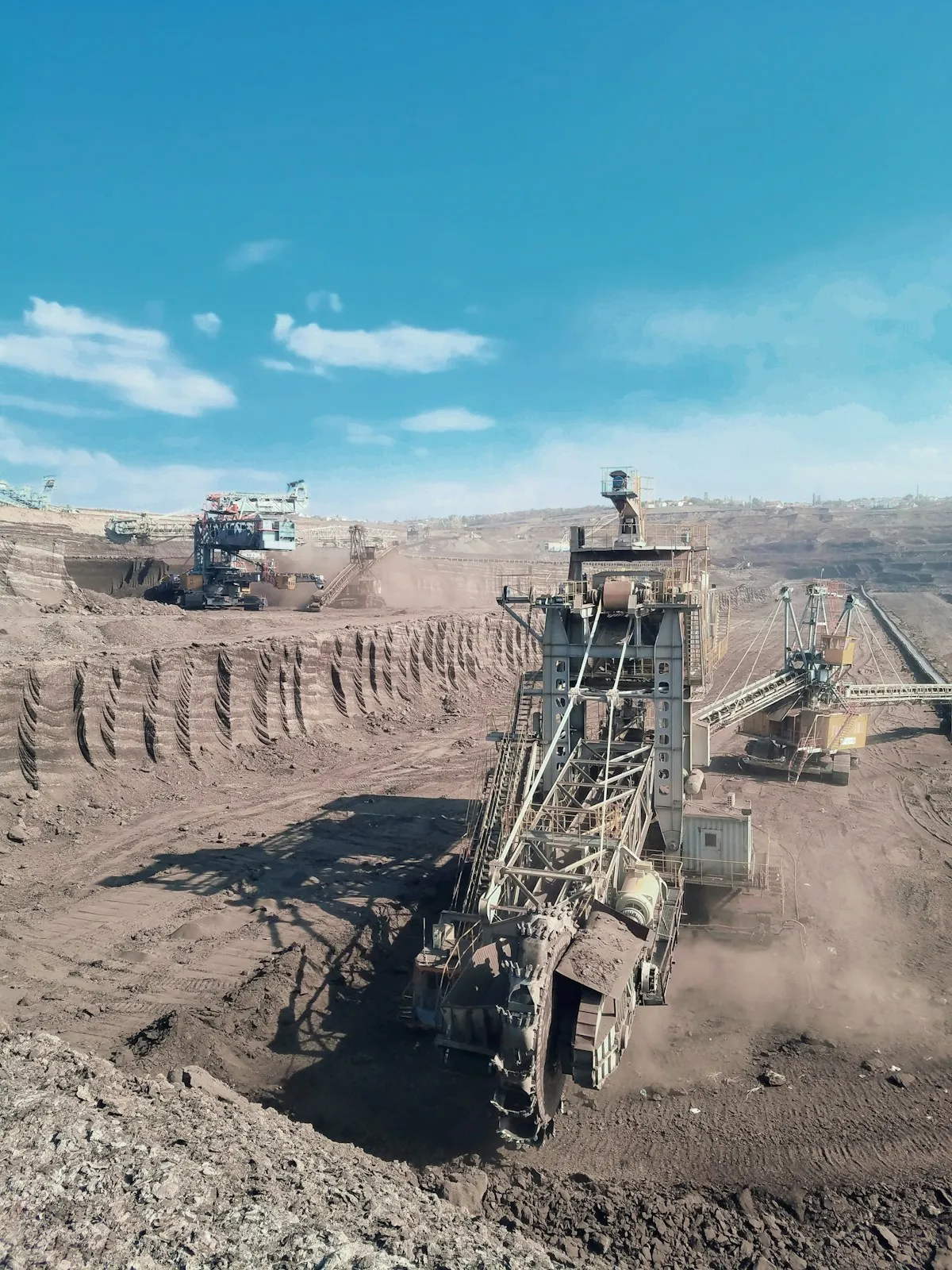
Open-pit mining is used when ore bodies are large, relatively low-grade, and near the surface. It’s the dominant method for modern large-scale gold production.
Steps in Open-Pit Mining
1. Exploration and Resource Evaluation Before any physical work, geologists conduct years of study:
- Geophysical surveys (airborne magnetic, gravity)
- Soil sampling and geochemical surveys
- Diamond drilling to extract core samples
- Laboratory assay of cores for gold grade
- 3D geological modeling to estimate ore quantity and grade
Typically takes 3-7 years and costs $50-300 million before any mining decision.
2. Mine Design and Permitting Engineers design the pit dimensions, waste rock storage, processing facilities, and infrastructure. Environmental impact assessments, water management plans, and community consultations are required.
Permitting in developed countries can take 5-10 years — one reason for the 10-20 year timeline from discovery to production.
ℹ Note
The 10-20 year development timeline from discovery to first gold production is a critical factor for investors. Even when gold prices surge, new supply cannot come online quickly. This structural delay is why gold’s supply remains inelastic and why price spikes can persist for years.
3. Stripping (Overburden Removal) The surface material above the ore (soil, rock, non-ore material) must be removed. For shallow ore, this ratio may be 3:1 (3 tonnes moved per tonne processed). For deeper operations, ratios of 10:1 or higher are common.
Massive haul trucks (some carrying 400 tonnes per load), excavators, and blast drilling remove billions of tonnes of rock over a mine’s lifetime.
4. Blasting and Ore Extraction Drill patterns are designed, loaded with explosives, and detonated. Blasted rock is loaded onto haul trucks.
5. Crushing and Grinding Ore is transported to the processing plant where it’s crushed in primary, secondary, and sometimes tertiary crushers to reduce rock from meter-sized boulders to centimeter-scale fragments, then ground in ball mills or SAG (semi-autogenous grinding) mills to a fine powder (typically 80-150 micrometers).
The Mining Process: Underground
When ore bodies are deep (typically >400-500 meters), narrow, or high-grade, underground mining becomes more economical.
Methods include:
- Cut and fill: Ore is excavated in horizontal slices; void is backfilled with waste rock or cemented paste
- Room and pillar: Chambers are excavated in a grid pattern leaving supporting pillars
- Sub-level caving: Ore is blasted from below and allows to collapse
- Block caving: Large ore blocks are undercut, causing the ore above to break and flow through drawpoints
Underground mines are typically higher-grade than open pits (grade must be high enough to justify the extra cost of shaft sinking, ventilation, equipment). South Africa’s deep mines (some exceeding 4 km depth) represent extremes of underground mining technology.
Challenges:
- Heat increases dramatically with depth (rock at 4 km can exceed 60°C)
- Rock pressure creates “rock burst” hazards
- Ventilation, cooling, and equipment lift-shaft costs are enormous

Gold Extraction: Cyanidation
After ore is ground to fine powder, gold must be extracted from the rock minerals. The dominant method for most of the world’s gold supply is cyanide leaching (cyanidation).
How Cyanidation Works
Gold dissolves readily in dilute cyanide solution in the presence of oxygen. This reaction is known as the Elsner equation:
4 Au + 8 NaCN + O₂ + 2 H₂O → 4 Na[Au(CN)₂] + 4 NaOH
In practice:
- Ground ore is mixed with a dilute cyanide solution (typically 100-500 parts per million — weaker than household bleach)
- Air or oxygen is introduced; gold dissolves as a cyanide complex (soluble)
- Rock minerals remain solid; gold is now in solution
Carbon-in-Leach / Carbon-in-Pulp
The gold-cyanide solution is passed over activated carbon (granular charcoal), which adsorbs (captures) the gold complex:
- Gold-cyanide complex from solution adheres to carbon surface
- Loaded carbon is removed and processed
- Gold is “stripped” from carbon using hot caustic soda solution
Heap Leach (For Low-Grade Ore)
For very low-grade material (sometimes as little as 0.3 g/tonne):
- Ore is crushed and stacked on impermeable liner pads (to prevent groundwater contamination)
- Dilute cyanide solution is dripped over the heap
- Solution percolates through the ore, dissolving gold
- Gold-laden solution (pregnant solution) is collected from the bottom
- Gold is recovered from solution via activated carbon or zinc precipitation
Heap leaching is lower-cost than tank leaching but less efficient (typically recovering 60-80% vs 90%+ for tank leaching).
⚠ Warning
Cyanide leaching is the subject of significant public concern and is banned or restricted in several jurisdictions (including parts of the EU). For investors evaluating mining stocks, a company’s cyanide management practices and regulatory environment can materially affect operational risk and share price.
Smelting and Doré Production
After carbon stripping or zinc precipitation, the gold solution is processed into a crude gold alloy called doré:
- Electrowinning: Electric current drives gold from the stripped solution onto steel wool cathodes
- Smelting: Steel wool with gold is melted in a furnace; gold pools in the melt
- Doré bar casting: The molten gold alloy is poured into molds
- Doré analysis: Each bar is fire-assayed to determine gold and silver content
A typical doré bar contains:
- 70-95% gold (varies by deposit)
- 5-25% silver (common impurity)
- Trace amounts of copper, base metals, and impurities
- Weight: typically 15-30 kg per bar
Doré bars are shipped to refineries where they’re processed into investment-grade fine gold (99.5-99.99% purity).
Environmental Considerations
Modern gold mining is highly regulated, but historical and artisanal mining have created significant environmental legacies:
Cyanide management: Modern operations use closed-loop systems and cyanide destruction processes. The International Cyanide Management Code provides industry standards. Despite public perception, cyanide incidents have decreased dramatically with modern management.
Acid mine drainage (AMD): When sulfide minerals (pyrite, arsenopyrite) are exposed to air and water during mining, they oxidize and create sulfuric acid, which can dissolve heavy metals into groundwater. A major long-term environmental concern for many historic mines.
Tailings: The fine rock powder remaining after gold extraction must be permanently stored. Tailings dam failures (like the 2015 Mariana, Brazil, and 2019 Brumadinho, Brazil, disasters — primarily for iron ore) demonstrate the catastrophic risk of poor management.
Mercury in artisanal mining: Small-scale artisanal mining uses mercury amalgamation to recover gold — an efficient but toxic process that has contaminated rivers in South America, Africa, and Southeast Asia. An estimated 15-20 million artisanal miners globally contribute approximately 20% of world gold supply while using practices banned in industrial mining.
To produce a single troy ounce of gold, a typical open-pit mine must excavate and process 20-50 tonnes of rock -- an extraction ratio that helps explain gold’s enduring scarcity and value.
Mining Economics: The All-In Sustaining Cost
The profitability of gold mining is measured by the All-In Sustaining Cost (AISC) — a standardized metric covering:
- Mining and processing costs
- Site overhead and general administration
- Exploration and study costs at existing operations
- Sustaining capital expenditure (equipment replacement, tailings management)
- Rehabilitation and reclamation provisions
Industry AISC (2023-2024): approximately $1,250-$1,400 per troy ounce
At $4,000+ gold prices, most producers generate substantial free cash flow. But AISC varies dramatically:
- Low-cost producers: $900-$1,100/oz (high-grade or large, efficient operations)
- Mid-cost producers: $1,200-$1,500/oz (typical)
- High-cost producers: $1,600-$2,000+/oz (deep underground, low-grade, or difficult metallurgy)
Higher gold prices incentivize the development of previously uneconomic deposits and the processing of lower-grade material — which is why supply eventually (slowly) responds to sustained price increases.
✓ Pro Tip
When evaluating gold mining stocks, compare each company’s All-In Sustaining Cost (AISC) to the current gold spot price. The difference is the company’s profit margin per ounce. Companies with AISC well below spot price generate strong free cash flow, while those near or above spot price face financial stress if prices decline.
The industry average All-In Sustaining Cost for gold production is approximately $1,250-$1,400 per ounce. At $4,000+ gold prices, most producers generate substantial free cash flow.
Why Supply Is Relatively Inelastic
Gold supply’s response to price increases is slow and limited:
- Long lead times: 10-20 years from discovery to production
- Declining grades: Easy-to-mine deposits were found and exploited first; remaining deposits are often deeper, lower-grade, or in difficult jurisdictions
- Regulatory and permitting delays: Environmental approval processes in developed countries take years
- Capital intensity: New mines require $1-10 billion in upfront capital
- Reserve depletion: Existing mines deplete their ore reserves; new production must replace existing production just to stay flat
Annual production of ~3,300-3,600 tonnes adds approximately 1.5-2% to the estimated 200,000 tonnes of above-ground gold stock. No matter how high the price goes, supply cannot grow rapidly — which is fundamentally different from agricultural commodities or manufactured goods where production can increase within months or a few years.
This supply inelasticity is a core reason gold retains its monetary properties. A currency that can be rapidly printed or manufactured is not a store of value. Gold’s limited and predictable supply growth underpins its scarcity — and scarcity underpins its value.
★ Important
Gold’s annual supply growth of approximately 1.5% is remarkably close to population growth rates, and far below the rate at which most fiat currencies expand their money supply (typically 5-15% per year). This built-in scarcity is the supply-side foundation of gold’s value as a long-term store of wealth.