From California to Klondike, gold rushes triggered the largest mass migrations in modern history and reshaped economies, societies, and entire continents. These weren’t just stories of prospectors striking it rich—they were demographic earthquakes that built cities, sparked wars, and fundamentally altered the course of nations.
Introduction: The Power of Gold Fever
Gold rushes represent a unique phenomenon in human history: the sudden transformation of remote wilderness into booming population centers within months. Between 1848 and 1900, four major gold rushes drew over 1.5 million migrants across oceans and continents, driven by the universal dream of instant wealth. These mass migrations accelerated industrialization, forced governments to respond with new infrastructure and laws, and in several cases, contributed to genocidal violence against indigenous populations.
Unlike the slow conquest campaigns of ancient empires, gold rushes happened at explosive speed. California’s population increased 25-fold in two years. Victoria, Australia, saw its population multiply seven times in a decade. Johannesburg grew from empty grassland to South Africa’s largest city in ten years. The Klondike drew 100,000 people to the frozen Yukon in just eighteen months.
The pattern repeated across four continents with remarkable consistency: discovery, explosive migration, rapid urbanization, environmental devastation, and ultimately, corporate consolidation as individual prospectors gave way to industrial mining operations.
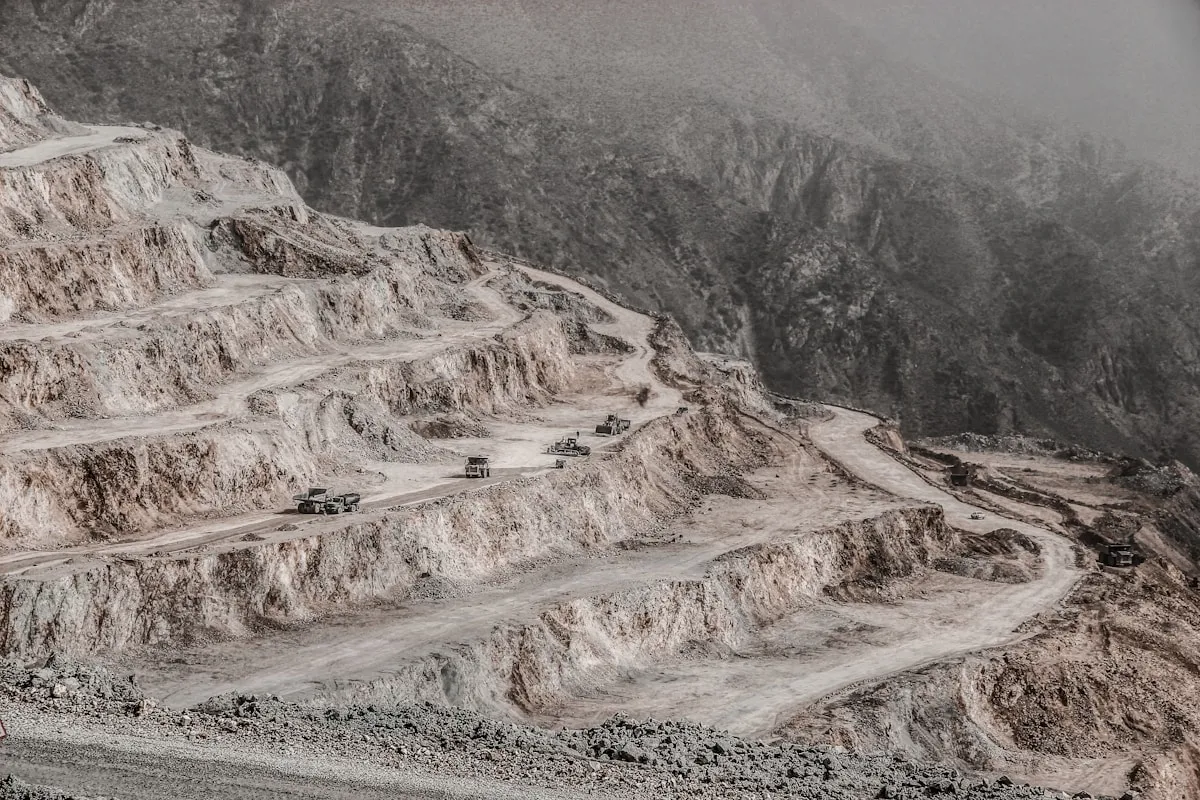
California Gold Rush (1848-1855): The Template for Modern Gold Fever
The Discovery That Changed America
On January 24, 1848, carpenter James Marshall spotted glittering flecks in the American River at Sutter’s Mill in Coloma, California. The timing could not have been more consequential: just nine days earlier, Mexico had ceded California to the United States through the Treaty of Guadalupe Hidalgo. America had just gained a vast territory—and unknowingly, the richest gold deposits discovered to that point in history.
John Sutter tried desperately to keep the discovery secret, fearing it would destroy his agricultural empire. He was right. Within months, his workers had abandoned him, squatters overran his lands, and his crops and cattle were stolen. The gold that should have made him wealthy instead ruined him.
When news reached San Francisco in March 1848, the city became a ghost town—businesses closed, ships sat abandoned in the harbor, and the male population fled to the goldfields. Then the cycle reversed: San Francisco exploded from roughly 1,000 residents in 1848 to 25,000 by 1850 as it became the primary entry point for prospectors arriving by sea.
The Forty-Niners: A Global Migration
The gold rush accelerated dramatically after President James K. Polk confirmed the discovery in his December 5, 1848 State of the Union address. What had been rumor became official fact, and the floodgates opened.
The year 1849 saw the largest wave of migration: approximately 90,000 people arrived in California, earning them the nickname “forty-niners.” By 1855, roughly 300,000 people had made the journey from around the world. This represented the largest mass migration in American history to that point.
The migrants came from everywhere:
- From the Eastern United States, traveling overland on wagon trains (over 5,000 wagons departed Missouri in spring 1849 alone)
- From Mexico, Chile, Peru, and other Latin American countries (the first to arrive in late 1848)
- From China (approximately 20,000 by 1852, seeking “Gold Mountain”)
- From Europe (30,000 from France alone, plus Germans, Irish, Italians, and others)
- From Hawaii (then called the Sandwich Islands), Australia, and the Pacific
About one-third of all forty-niners were immigrants from outside the United States. The journey itself was brutal. Overland travelers faced months of hardship crossing deserts and mountains. Those taking the sea route around Cape Horn spent six to eight months at sea. Some took the Panama shortcut, risking tropical disease while crossing the isthmus.
ℹ Note
The California Gold Rush was history’s first truly global migration event. Miners arrived from six continents, speaking dozens of languages, creating one of the most ethnically diverse populations anywhere in the world at that time — a diversity that permanently shaped California’s cultural identity.
Economic and Social Transformation
The California Gold Rush produced approximately $2 billion worth of gold (in 1849 dollars) between 1848 and 1855. At its peak from 1851 to 1855, California produced 45% of the world’s gold supply. This sudden injection of gold reinvigorated the American economy, which had been struggling through depression.
California’s annual gold output peaked at 3.9 million troy ounces in 1852. The state produced roughly $60 million in gold annually at its height—an astronomical sum that transformed not just California, but American finances and international trade.
The gold rush created modern California:
- Statehood came rapidly: California joined the Union on September 9, 1850, as part of the Compromise of 1850
- Infrastructure developed at breakneck pace: roads, bridges, water systems, and eventually railroads
- San Francisco became a world-class city, with banks, newspapers, theaters, and cultural institutions
- The entrepreneurs who supplied miners—not the miners themselves—often made the real fortunes (Levi Strauss created durable work pants; Wells Fargo established banking services; merchant Samuel Brannan became California’s first millionaire by selling supplies)
The Dark Legacy
The California Gold Rush devastated Native American populations. Before the rush, approximately 150,000 Native Americans lived in California. By 1860, only 30,000 remained—a population decline of 80% in just twelve years. This dramatic collapse resulted from disease, starvation, and what historians now recognize as genocide.
White miners systematically attacked indigenous communities, forcing them from their lands. California’s legislature passed laws that effectively legalized slavery of Native Americans. The 1850 Act for the Government and Protection of Indians denied Native Americans the right to testify in court and allowed for their forced labor. Violence was endemic: entire villages were massacred, and the state government offered bounties for Native American scalps.
The Chinese faced severe discrimination as well. As surface gold became harder to find, white miners increasingly viewed Chinese miners as competitors. California passed foreign miners’ taxes specifically targeting Chinese immigrants (charging $20 monthly—an enormous sum). Violence and riots drove Chinese miners from many camps, and the Chinese Exclusion Act of 1882 would eventually ban further Chinese immigration entirely.
From Individual to Industrial Mining
By the mid-1850s, the easy surface gold—dust, flakes, and nuggets that could be panned from streams—was exhausted. Mining shifted to deeper, more capital-intensive operations. Hydraulic mining, which used high-pressure water jets to blast away hillsides, proved devastatingly effective but environmentally catastrophic. By the late 1850s, most prospectors had become wage laborers working for large mining companies rather than independent fortune-seekers.
The California Gold Rush set the template that subsequent gold rushes would follow: explosive discovery, mass migration, rapid depletion of surface gold, consolidation into corporate operations, and lasting transformation of the landscape and society.
Australian Gold Rushes (1851–1890s): Building a Nation
Victoria’s Golden Decade
Australia’s gold rushes began in 1851, just as California’s was reaching its peak. The timing was deliberate: when the newly formed colony of Victoria saw thousands of workers abandoning their jobs to head to California, the government offered a £200 reward to anyone who found gold within 200 miles of Melbourne.
Within months, gold was discovered near Clunes in June 1851, followed rapidly by even richer finds at Ballarat (August 1851), Castlemaine, and Bendigo (November 1851). The Victorian fields proved even richer than California. At Mount Alexander near Castlemaine, gold literally lay on the surface—nuggets could be picked up without digging. This was one of the richest shallow alluvial goldfields ever discovered.
The Scale of Discovery
Victoria’s gold production was staggering. Between 1851 and 1896, Victoria produced 61 million troy ounces of gold—nearly 1,900 tonnes. During the 1850s, Victoria accounted for more than one-third of the world’s entire gold production. At the peak in 1856, Victoria extracted over 3 million troy ounces in a single year.
At Ballarat and Bendigo, gold poured into the Melbourne Treasury at a rate of two tonnes per week during the peak years. The Welcome Nugget, found at Ballarat in 1858, weighed 69 kilograms—one of the largest gold nuggets ever discovered.
For its geographic size, Victoria has produced more gold than any other state in Australia: about 11 kilograms for every square kilometer. The Victorian goldfields remained productive for decades, with some mines operating continuously until the 1920s.
A Demographic Revolution
The Australian gold rushes triggered the most dramatic demographic transformation in the nation’s history. In 1851, Australia’s total population was 437,655, with just 77,345 (18%) living in Victoria. A decade later, Australia’s population had reached 1,151,947, and Victoria’s population had exploded to 538,628—47% of the Australian total and a seven-fold increase.
Between 1851 and 1871, Australia’s population nearly quadrupled to 1.7 million as migrants arrived from every continent. The influx wasn’t just from Britain: significant numbers came from China (over 20,000 by 1855), Germany, Ireland, Italy, France, and even California (experienced miners brought their knowledge across the Pacific).
The gold rushes fundamentally changed Australia from a penal colony into a prosperous, free society. New towns sprung up overnight. Bendigo grew from a sheep farm to a city of 40,000 in one year. Smaller towns saw population increases of 1,000–3,000% in a single decade.
Eureka Stockade: The Birth of Australian Democracy
The Australian gold rushes shaped not just the economy but the political character of the nation. To fund law enforcement on the goldfields, the colonial governments of New South Wales and Victoria imposed a harsh licensing system: every miner had to pay 30 shillings per month—whether they found gold or not—and carry their license at all times. Police enforced this through brutal raids, and corruption was rampant.
Miners resented the license fees, the corrupt police, and their lack of political representation (they couldn’t vote and had no say in government). Opposition to the system reached its peak at Ballarat in November 1854, when miners built a stockade at the Eureka diggings and swore allegiance to the Southern Cross flag.
On December 3, 1854, government troops attacked the lightly defended stockade. Twenty-two miners and six soldiers died in the assault. Though the rebellion was crushed, public opinion shifted dramatically. Within months, the license fee was abolished, and miners gained the right to vote.
The Eureka Stockade became a foundational moment in Australian democracy. The principles it represented—equality, voting rights, and resistance to unjust authority—helped shape Australia’s democratic institutions. Australia would go on to pioneer the secret ballot (the “Australian ballot”), the eight-hour workday, and eventually, the formation of the world’s first Labor Party.
★ Important
The Eureka Stockade illustrates how gold rushes reshaped not just economies but political systems. A tax dispute among miners in 1854 catalyzed democratic reforms that influenced governance worldwide — the Australian secret ballot was later adopted by Britain, the United States, and most modern democracies.
The Chinese Experience
Chinese miners played a major role in the Victorian gold rushes, particularly after 1855. By the end of 1855, over 19,000 Chinese immigrants worked the goldfields at Ballarat, Bendigo, Castlemaine, and other locations. Most came from Guangdong Province in southern China, driven by economic hardship and the promise of wealth in what they called “New Gold Mountain.”
However, Chinese miners faced systematic discrimination and violence. Anti-Chinese riots erupted at several goldfields. Colonial governments imposed special entry taxes on Chinese immigrants and passed laws restricting their movements and rights. This discrimination laid the foundation for the White Australia policy that would define Australian immigration for much of the 20th century.
Despite the hostility, Chinese miners established vibrant Chinatowns in Melbourne, Bendigo, and Castlemaine. Their contributions to Victorian society were substantial: they brought new agricultural techniques, established successful businesses, and enriched the cultural fabric of the goldfields.
Lasting Transformation
The Victorian gold rushes transformed Australia from a struggling colony into a prosperous society. The wealth generated financed railways, roads, libraries, theaters, art galleries, and universities. Melbourne, enriched by gold wealth, became known as “Marvelous Melbourne” by the 1880s—one of the world’s great cities, compared favorably to Paris and London.
The architecture of Victorian gold-boom cities still reflects this era: ornate government buildings, grand hotels, elaborate theaters, and impressive civic structures. Ballarat today preserves this heritage at Sovereign Hill, a 60-acre recreation of a gold rush town that attracts visitors from around the world.

Witwatersrand Gold Rush (1886-Present): Building Johannesburg
Discovery of the World’s Greatest Goldfield
In July 1886, Australian prospector George Harrison discovered gold on the farm Langlaagte in the Witwatersrand (“Ridge of White Waters” in Afrikaans), a low range of hills in South Africa’s Transvaal region. Unlike previous gold discoveries, Harrison didn’t stumble on nuggets in a stream. He found gold in conglomerate rock formations—gold that extended underground in massive reefs.
The significance of Harrison’s discovery only became apparent gradually. Early prospectors, including Harrison himself, didn’t immediately grasp that they had found the world’s largest gold deposit. Harrison sold his claim for just £10 and left for other goldfields, never knowing he had discovered what would become the richest goldfield in human history.
Within months, as geologists mapped the extent of the gold-bearing reefs, it became clear that the Witwatersrand deposit was extraordinary. The gold-bearing strata stretched for over 100 kilometers in what would become known as the “Golden Arc,” running from Johannesburg to Welkom. In some areas, the reef system reached depths of over 3.6 kilometers, making it both the longest and deepest goldfield ever discovered.
The Rise of Johannesburg
By mid-1886, an army of diggers had descended on the Witwatersrand, staking claims along a line that stretched 40 miles from west to east. The Transvaal government, a small Boer republic, dispatched officials to establish order and plan a city. They founded Johannesburg, naming it after two government officials.
The transformation happened at breathtaking speed. Ferreira’s Camp, a shanty town of 3,000 people in 1886, became Johannesburg within months. Within ten years, Johannesburg was larger than Cape Town, which had existed for over 200 years. By 1896, Johannesburg was the largest city in South Africa.
Fortune hunters arrived from California, Australia, Cornwall, Wales, and across Europe. The population exploded to 100,000 by the mid-1890s. Unlike gold rush towns that boomed and quickly faded, Johannesburg continued to grow. Within a century, it would become one of the world’s largest cities and the economic powerhouse of Africa.
Industrial Mining from the Start
The Witwatersrand differed fundamentally from earlier gold rushes. The gold wasn’t in streams or easily accessible surface deposits. It was locked in hard conglomerate rock that required industrial-scale mining from the beginning.
Individual prospectors with pans and shovels couldn’t extract Witwatersrand gold. The pebbly conglomerate had to be mined, crushed, and processed with mercury (later cyanide) to extract even an ounce or two of gold. As the reefs dipped southward, they descended to depths of hundreds, then thousands of feet. South African gold mines would eventually become the deepest in the world—some reaching over 3 kilometers underground.
These factors promoted rapid consolidation. By the mid-1890s, control of the entire Witwatersrand gold industry rested with a handful of massive mining houses. These companies commanded thousands of workers and millions of dollars in capital raised from European and American investors. Mining magnates like Cecil Rhodes and the Oppenheimer family built empires on Witwatersrand gold.
✓ Pro Tip
The Witwatersrand pattern — where individual prospectors were quickly replaced by corporate mining operations — foreshadows modern gold investing. Today, investors gain exposure to gold mining through publicly traded companies rather than panning for gold, and evaluating mining stocks requires understanding the same capital-intensive economics that drove 1890s consolidation.
Scale of Production: Dominating World Supply
The Witwatersrand goldfield has produced approximately 50% of all gold ever mined in human history—over 50,000 tonnes since 1886. For decades, South Africa was the world’s largest gold producer, accounting for up to 70% of global annual production during peak years in the mid-20th century.
Unlike California or the Klondike, which peaked and declined within a decade, the Witwatersrand maintained production for over a century. Gold mining continued uninterrupted from 1886 to the present day, though output has declined significantly since 2000 as the most accessible deposits have been exhausted.
Political Consequences: The Path to War
The Witwatersrand gold rush had profound political consequences. The influx of foreigners (called “uitlanders”) into the Transvaal Republic created tensions with the Boer government led by President Paul Kruger. By the mid-1890s, uitlanders outnumbered Boer citizens, but they were denied voting rights and faced discriminatory laws.
British officials, eager to bring the goldfields under British control (Britain’s gold reserves had fallen to dangerously low levels), exploited these tensions. In 1895, Cecil Rhodes backed the Jameson Raid, a failed coup attempt against the Transvaal government. When that failed, Britain escalated pressure, demanding immediate voting rights for all uitlanders.
In September 1899, Britain delivered an ultimatum to the Transvaal. When President Kruger rejected it, the Second Anglo-Boer War began—a brutal conflict lasting until 1902 that killed approximately 75,000 people and devastated the region. The war was fundamentally about control of the Witwatersrand goldfields and the economic power they represented.
Legacy: Africa’s Economic Capital
The Witwatersrand gold rush made Johannesburg the economic capital of Africa. The city’s stock exchange, banking sector, and corporate headquarters dominate the southern African economy. The vast wealth generated by gold financed South Africa’s industrialization, railway networks, and infrastructure.
However, the legacy is complex. The mining industry relied heavily on migrant labor systems that exploited Black African workers, paying them poverty wages while denying them basic rights. These labor practices and the racial segregation they entrenched contributed directly to the apartheid system that would define South Africa for much of the 20th century.
Today, massive mine dumps—some over 30 meters tall—remain as landmarks of Johannesburg (called “eGoli” or “place of gold” in Zulu). The environmental impact has been severe: weakened geological strata, disrupted drainage patterns, and altered ecosystems. Yet the city continues to thrive, a testament to how a single geological formation can shape a nation’s destiny.
South Africa’s Witwatersrand goldfield has produced over 50,000 tonnes of gold since 1886 — approximately 50% of all gold ever mined in human history.
Klondike Gold Rush (1897-1899): The Last Great Rush
Discovery in the Frozen North
On August 16, 1896, George Carmack, his wife Kate (a Tagish woman), and her brother Skookum Jim discovered gold on Bonanza Creek, a tributary of the Klondike River in Canada’s Yukon Territory. Unlike earlier gold rushes where news spread quickly, the extreme remoteness of the Klondike meant the discovery remained largely unknown for nearly a year.
Everything changed in July 1897, when two ships—the Excelsior arriving in San Francisco and the Portland reaching Seattle—carried miners returning from the Yukon with bags full of gold. Newspaper reports went wild. The Portland’s passengers reportedly carried over a ton of gold among them. In an America still recovering from the economic depression of the 1890s, the timing was perfect for gold fever to ignite one more time.
The Stampede North
The Klondike Gold Rush triggered an extraordinary stampede. Within six months of the July 1897 news, approximately 100,000 people set out for the Yukon. Only about 30,000 would actually reach Dawson City, the gold rush boomtown at the junction of the Klondike and Yukon rivers. The journey itself eliminated most would-be prospectors.
The brutal reality of reaching the Klondike:
Getting to the Klondike required crossing some of the most forbidding terrain in North America. Two main routes dominated: the Chilkoot Trail from Dyea, Alaska, and the White Pass Trail from Skagway. Both were nightmarish.
The Chilkoot Trail was steep and hazardous, climbing 1,000 feet in the final half-mile through what became known as the “Golden Stairs”—1,500 steps carved into snow and ice. Too steep for pack animals, prospectors had to carry everything themselves. Canadian authorities required each person to bring a year’s worth of supplies—approximately one tonne of food and equipment. This meant making 30 to 40 trips up and down the pass to relay supplies, effectively trekking 4,000 kilometers just to cross 53 kilometers of trail.
The White Pass Trail appeared easier at first—it rose more gradually and could supposedly accommodate pack animals. In reality, it became known as “Dead Horse Trail” after thousands of horses died in the mud, on sharp rocks, or fell from narrow cliff ledges where the trail was only two feet wide with 500-foot drops. The trail became notorious for suffering and death.
Winter temperatures in the mountain passes normally sat at -20°F (-29°C), with -50°F (-45°C) not uncommon. Avalanches killed dozens. Disease stalked the trails. An estimated 3,000 horses died on the White Pass Trail alone—so many that their bodies had to be cleared because the stench made the route impassable.
Those who survived the mountain passes then faced building rafts or boats at Lakes Bennett and Lindeman for the final 500-mile journey down the Yukon River to Dawson City. In May 1898, 7,124 boats of varying size and quality left the lakes. Many capsized in rapids, drowning their passengers and sending supplies to the bottom of the river.
Dawson City: Boomtown in the Wilderness
Dawson City didn’t exist before 1896. Two years later, it housed 30,000 people—at that moment, one of the largest cities in Canada. The population of nearby Edmonton, Alberta tripled to 4,000. Vancouver’s population doubled. Seattle businesses made over $1 million selling supplies to Klondikers.
For a brief moment, Dawson was a genuine city: fire hydrants, electric lights, hotels, saloons, theaters, restaurants, and banks. Unlike the lawless camps of California, the North-West Mounted Police maintained strict order. Crime was relatively rare, and notorious criminals like Soapy Smith were kept out of Canadian territory (Smith ran a criminal operation in Skagway until he was killed in a shootout in July 1898).
Yet Dawson faced constant challenges. Its remoteness made supply difficult. When the rivers froze, food became scarce. In the winter of 1897–1898, food shortages became critical, and the NWMP evacuated prospectors without supplies to prevent starvation.
Fire was a constant threat. Major fires in 1898 and 1899 destroyed significant portions of the city, including the post office, banks, and major saloons—losses totaling over $1 million in 1899 dollars.
The Reality: Most Found Nothing
By the time most stampeders reached Dawson in 1898, the best claims had already been staked by locals and early arrivals in 1896 and 1897. The tales of “gold for the taking” proved grossly exaggerated. Most miners found nothing or earned barely enough to survive.
The work required to extract gold was brutal. Most gold lay 10 or more feet below the surface, trapped in permafrost—permanently frozen ground. Miners had to thaw the ground by building fires, digging a few feet, then repeating the process. It was exhausting, dangerous work that yielded little for most prospectors.
Of the 100,000 who set out for the Klondike, only a few hundred actually became rich. George Carmack, one of the original discoverers, left the Yukon with $1 million worth of gold. But he was the exception. Most stampeders either returned home having lost money on the journey, or stayed and worked for wages for others who had successfully staked claims.
The typical Klondiker spent $1,000 just reaching the region (equivalent to roughly $38,000 today). Combined spending exceeded the total value of gold extracted from the Klondike between 1897 and 1901—approximately $29 million. The real money was made by those who never went to the goldfields: Seattle merchants, shipping companies, and suppliers.
⚠ Warning
The Klondike’s economics carry a timeless investing lesson: when collective spending to acquire an asset exceeds the asset’s total value, most participants lose money. This same dynamic appears in modern gold market speculation — understanding total costs versus realistic returns is essential before committing capital.
The End: As Quickly as It Began
The Klondike Gold Rush ended as abruptly as it began. In August 1898, gold was discovered at Atlin Lake. Then in the winter of 1898–1899, much larger quantities were found at Nome, Alaska. In 1899, a flood of prospectors left Dawson for Nome—about 2,500 from Dawson alone in August and September. By late 1898, Dawson’s population was already in rapid decline. The rush was over.
Large-scale gold mining in the Yukon Territory continued until 1966, and some small operations persist today. But the stampede, the excitement, the possibility of sudden wealth for any individual with a pick and pan—that ended in 1899, just two years after it began.
The Human Cost
The Klondike Gold Rush devastated indigenous peoples in the region. The Hän people, semi-nomadic hunters and fishermen who had lived in the area for thousands of years, were forcibly removed from their traditional hunting grounds to make way for prospectors.
The mining operations devastated the ecosystem. Forests around the lakes were completely cut down for timber to build boats and structures. The Hän lost their hunting and fishing grounds, suffered from introduced diseases like smallpox, and faced poverty and starvation. By 1904, they required support from the North-West Mounted Police to prevent famine.
The environmental destruction was severe. Hydraulic mining and the use of mercury contaminated waterways. The landscape was torn apart, leaving scars that remain visible today.
Cultural Legacy: Romanticizing the North
Despite—or perhaps because of—its brevity and the failure of most participants, the Klondike Gold Rush captured the imagination like few other historical events. Jack London’s stories, drawn from his own Klondike experiences, romanticized the frozen North and became classics of American literature. Films, songs, and stories have kept the Klondike alive in popular culture.
The image of stampeders climbing the Golden Stairs in an endless line—burdened by heavy packs, struggling step by step toward an uncertain future—became an enduring symbol not just of the Klondike but of human determination and the pursuit of dreams, however unlikely.
"The Klondike was the last great adventure of the frontier — where men carried a ton of supplies over frozen mountains for the chance of finding gold that most would never see."— Pierre Berton, Klondike: The Last Great Gold Rush
Common Patterns: What Gold Rushes Reveal
Across California, Australia, South Africa, and the Klondike, gold rushes followed remarkably similar patterns, revealing consistent truths about human behavior, economic systems, and social transformation:
1. Explosive Demographics
Gold rushes triggered the fastest population movements in modern history before the 20th century. San Francisco grew 25-fold in two years. Victoria’s population multiplied seven times in a decade. Johannesburg went from empty grassland to major city in ten years. Dawson City grew from nothing to 30,000 in two years.
2. The Suppliers Get Rich
Individual prospectors rarely made fortunes, but those who supplied them often became wealthy. Levi Strauss sold denim pants. Wells Fargo provided banking. Samuel Brannan sold mining supplies at inflated prices. The pattern held everywhere: the real money was in picks, pans, food, transportation, and entertainment, not in panning for gold.
3. From Individual to Corporate
Every gold rush followed the same trajectory: initial surface finds accessible to individuals, rapid depletion of easy gold, then shift to industrial mining requiring capital and technology. Independent prospectors became wage laborers. Corporate consolidation was inevitable because deeper gold required machinery, engineering, and investment beyond individual means.
4. Indigenous Peoples Suffered
Every gold rush brought catastrophe to indigenous populations. California’s Native Americans faced genocide, losing 80% of their population in twelve years. Australian Aboriginal peoples were driven from their lands and saw their societies shattered. The Hän people of the Yukon faced starvation after losing their hunting grounds. The pattern was consistent and devastating.
5. Rapid Urbanization
Gold rushes built cities at unprecedented speed. San Francisco, Melbourne, Johannesburg—all grew from small settlements or empty land into major urban centers within years. The infrastructure followed: railways, roads, telegraph lines, banks, newspapers, theaters. Gold rushes accelerated decades of normal development into a few years.
6. Social and Political Change
Gold rushes attracted not just prospectors but political radicals, reformers, and people with new ideas. They challenged existing power structures. The Eureka Stockade helped birth Australian democracy. The California Gold Rush accelerated American expansion and the debate over slavery. The Witwatersrand rush precipitated war and ultimately shaped South African politics for a century.
7. Environmental Devastation
Hydraulic mining, mercury and cyanide processing, deforestation, and landscape destruction followed every gold rush. Rivers were diverted, hillsides blasted away, and ecosystems destroyed. The environmental costs were rarely counted but were permanent.
8. Few Found Fortune, Many Found Work
The dream of striking it rich drove millions to goldfields, but few achieved it. Most prospectors either returned home broke or stayed and worked for wages. The gold rush created employment but not the individual fortunes that had lured people there.
Legacy and Conclusion
The great gold rushes of the 19th century fundamentally reshaped the modern world. They accelerated the colonization and development of frontier regions, built cities and infrastructure at unprecedented speed, and integrated remote areas into global economic systems.
California’s gold helped finance the American Civil War and fund westward expansion. Australian gold built Melbourne into a world-class city and helped transform Australia from a penal colony into a prosperous democracy. The Witwatersrand created Johannesburg and made South Africa an industrial power, though at tremendous human cost. The Klondike became the last romantic frontier, capturing imaginations even as it demonstrated that the age of individual prospecting was ending.
Gold rushes revealed the power of dreams—and their costs. The promise of wealth drove millions to cross oceans, deserts, and mountains. Most failed to find fortune, but their collective efforts built nations, created infrastructure, and integrated regions into the global economy far faster than would otherwise have been possible.
The pattern established by these gold rushes—sudden discovery, explosive migration, rapid development, corporate consolidation—would repeat throughout the 20th century with oil, diamonds, rare earth minerals, and today’s technology booms. The gold rushes provided the template for how resources shape human migration, economic development, and geopolitical power.
Today, over 170 years after James Marshall’s discovery at Sutter’s Mill, we still feel the echoes of gold fever. The cities built by gold rushes—San Francisco, Melbourne, Johannesburg—remain major economic centers. The infrastructure created to reach goldfields—railways, ports, roads—still carries commerce. The companies formed to mine gold—many of which still operate—helped create modern corporate capitalism.
And somewhere, perhaps, another miner still pans for gold in California’s streams, Australian creeks, or South African rivers, keeping alive the dream that drove millions to transform the world: the possibility that glittering flakes of metal might change a life, build a fortune, and write history.