
Introduction: A 6,000-Year Love Affair
Gold has captivated humanity for over six millennia. No other substance has so consistently maintained its allure across cultures, continents, and centuries. From the moment humans first discovered gold nuggets glinting in stream beds, this lustrous yellow metal has occupied a unique place in human civilization—simultaneously treasure and currency, adornment and investment, symbol and substance.
This comprehensive guide traces gold’s remarkable journey through human history, exploring how this precious metal shaped empires, enabled trade, inspired exploration, and continues to influence global economics today.
Why Gold? The Science Behind the Obsession
Before exploring gold’s historical role, we must understand why gold became humanity’s metal of choice.
Unique Physical Properties
Indestructibility: Gold does not corrode, tarnish, or oxidize. A gold coin buried 3,000 years ago emerges as brilliant as the day it was minted. This permanence made gold perfect for storing value across generations.
Malleability: Gold is the most malleable metal on Earth. A single ounce can be hammered into a sheet covering 100 square feet, or drawn into 50 miles of wire. This workability enabled artisans to create intricate jewelry and artifacts.
Rarity: Gold is scarce enough to be valuable but common enough to be useful. All the gold ever mined—roughly 216,000 metric tonnes, on the World Gold Council’s latest estimate—would fit into a cube only about 22 metres (72 feet) on each side. This scarcity ensures value while permitting circulation.
Distinctive Appearance: Gold’s warm yellow luster is unmistakable. Unlike silver (which tarnishes) or copper (which turns green), gold maintains its radiant appearance indefinitely.
Density: Gold is remarkably dense (19.3 times denser than water), meaning significant value can be concentrated in small, portable quantities—essential for currency and trade.
The Result: A Perfect Monetary Metal
These properties converged to make gold humanity’s most enduring store of value:
- Durable: Lasts forever without degrading
- Divisible: Can be melted and reformed without losing value
- Fungible: One ounce equals another ounce
- Portable: High value-to-weight ratio
- Recognizable: Distinctive appearance prevents counterfeiting
- Scarce: Limited supply maintains value

Ancient Civilizations: Gold’s First Great Era (3000 BCE - 476 CE)
Ancient Egypt: Where Gold Culture Began
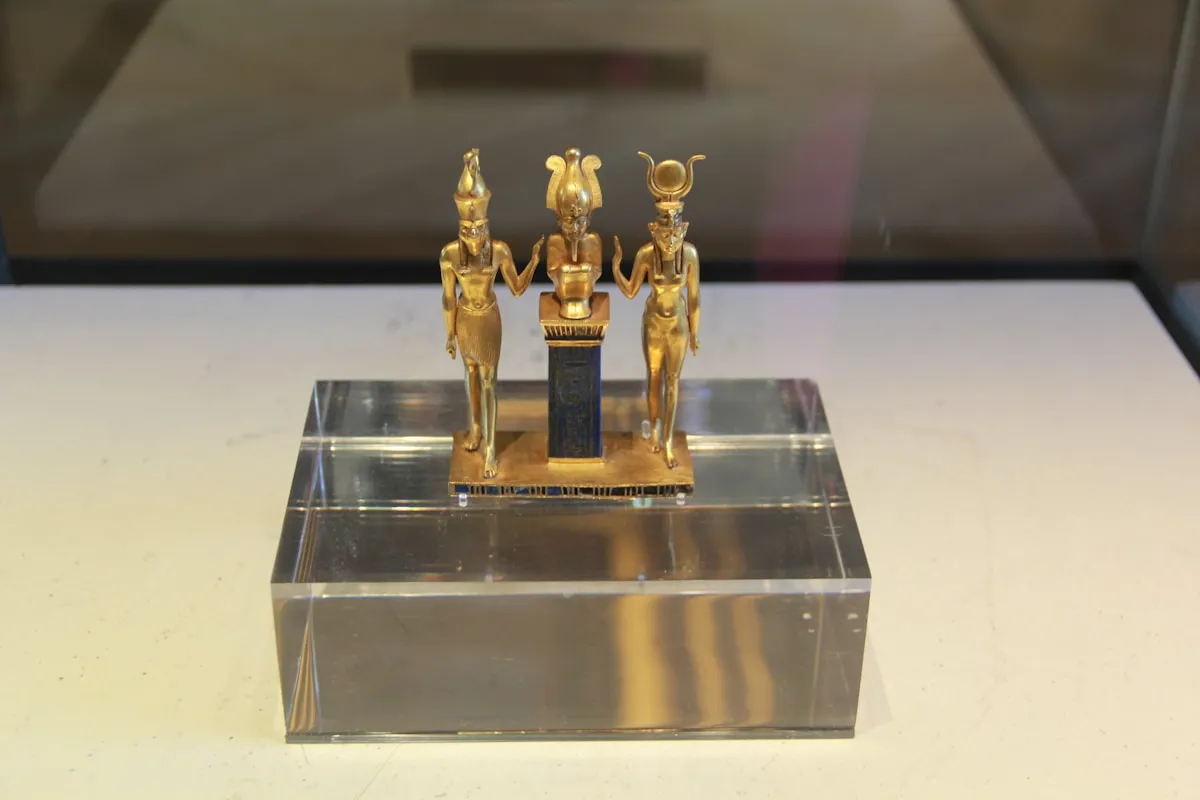
The ancient Egyptians developed Western civilization’s first sophisticated gold culture around 3000 BCE. Egyptian hieroglyphs from as early as 2600 BCE describe gold as “the flesh of the gods.”
Religious Significance: Egyptians believed gold was divine material—literally the skin of Ra, their sun god. This spiritual association elevated gold beyond mere wealth to sacred substance.

Pharaonic Gold: Egyptian pharaohs, considered living gods, surrounded themselves with gold. King Tutankhamun’s tomb (discovered 1922) contained over 5,000 gold objects weighing more than 1,000 pounds. His innermost coffin was solid gold weighing 243 pounds (110 kg).
Mining Operations: Egypt controlled gold-rich regions in Nubia (modern Sudan), establishing history’s first large-scale mining operations. The Turin Papyrus (1160 BCE) contains the world’s oldest known geological map, showing gold mine locations.
Trade Network: Egyptian gold fueled Mediterranean trade for 3,000 years, establishing gold’s role as international currency.
Mesopotamia: Gold as Power
The ancient civilizations of Mesopotamia (Sumer, Akkad, Babylon, Assyria) used gold to demonstrate political power and divine favor.
Royal Tombs of Ur (2600 BCE): Archaeological excavations revealed elaborate gold artifacts including crowns, jewelry, and ceremonial daggers, showing sophisticated metalworking techniques.
Hammurabi’s Code (1754 BCE): This famous legal code established gold and silver as official payment standards, creating history’s first recorded monetary regulations.
Ancient Greece: Gold and Philosophy
Greek civilization added intellectual dimension to gold’s significance.
Coinage Revolution: Lydia (modern Turkey) struck the world’s first standardized gold and silver coins around 600 BCE under King Croesus—a name still synonymous with wealth. This innovation revolutionized trade by creating portable, standardized value.
ℹ Note
Croesus’s innovation of striking pure gold coins (as opposed to the earlier electrum coins of mixed gold and silver) was revolutionary. For the first time, traders could rely on standardized purity without needing to assay each transaction — the same principle behind modern LBMA-certified bullion bars.
Philosophy of Gold: Greek philosophers like Plato and Aristotle analyzed gold’s role in society. Aristotle defined the characteristics of ideal money—durability, portability, divisibility, and intrinsic value—which gold perfectly embodied.
Golden Artifacts: Greek artisans created stunning gold jewelry, ceremonial objects, and statuary. The Treasury of Atreus and other Mycenaean sites contained elaborate gold death masks and grave goods.
Roman Empire: Gold as Imperial Power
Rome elevated gold to unprecedented political and economic importance.
The Aureus: Rome’s gold coin, the aureus (introduced by Julius Caesar), became the ancient world’s dominant currency. Roman gold coins circulated from Britain to India, facilitating history’s first truly global trade network.
Military Payments: Roman soldiers received payment partly in gold, which they could spend anywhere in the vast empire. This created the first large-scale monetary economy.
Imperial Display: Roman emperors demonstrated power through lavish golden regalia, gilded monuments, and golden statues. Emperor Nero’s “Golden House” reportedly used gold leaf extensively.
Decline and Gold: Rome’s gradual debasement of its gold coinage (reducing gold content while maintaining face value) contributed to the empire’s economic decline. By the 3rd century CE, trust in Roman currency had collapsed—a cautionary tale about monetary integrity.
⚠ Warning
Rome’s currency debasement is the ancient world’s clearest example of what happens when governments dilute their money supply. The pattern — gradual debasement leading to inflation and loss of confidence — has repeated with every fiat currency in history, and is a central argument for holding physical gold today.
The Roman aureus contained roughly 8 grams of gold and circulated from Britain to India — making it the ancient world’s first truly global currency.
Medieval Period: Gold’s Dark Ages and Renaissance (476 - 1492 CE)
Byzantine Gold: Preserving Civilization
After Rome’s fall, the Byzantine Empire (Eastern Roman Empire) maintained sophisticated gold currency for 1,000 years.
The Solidus: Introduced by Constantine I (309 CE), this gold coin maintained consistent weight and purity for 700 years—unprecedented monetary stability. The solidus became the medieval world’s dominant trade currency.
Economic Continuity: While Western Europe descended into economic chaos, Byzantine gold facilitated continued trade with Asia, preserving economic networks through the Dark Ages.
Islamic Golden Age: Gold Facilitates Knowledge
The Islamic Caliphates (7th-13th centuries) used gold to fund history’s first international intellectual network.
Gold Dinars: Islamic gold coins followed strict Quranic specifications, creating trusted currency from Spain to India. This monetary unity enabled the Islamic Golden Age’s scientific and cultural achievements.
Trade Routes: Islamic merchants established trade routes connecting Europe, Africa, and Asia, with gold serving as universal currency. Cities like Baghdad, Damascus, and Cairo became wealthy gold trading centers.
West African Gold: Islamic traders tapped West African gold sources, particularly modern Mali and Ghana, creating trans-Saharan gold trade routes that enriched both African kingdoms and Mediterranean civilizations.
Medieval Europe: Gold’s Gradual Return
Feudalism and Barter: Early medieval Europe operated primarily on agricultural barter. Gold remained scarce, largely locked in church treasuries and royal collections.
Florin and Ducat: Venice (1284) and Florence (1252) reintroduced gold coinage to Western Europe, facilitating the revival of trade. The Florentine florin became Europe’s dominant gold currency.
Gothic Cathedrals: Medieval churches used gold extensively in religious art—altarpieces, chalices, crosses, and reliquaries—demonstrating gold’s continuing sacred significance.
Guild Craftsmanship: Medieval goldsmith guilds developed sophisticated techniques, creating intricate jewelry and ceremonial objects that showcased technical mastery.
Age of Exploration: Gold Drives Discovery (1492 - 1800)
Spanish Conquistadors: Gold’s Dark Chapter
The European “discovery” of the Americas unleashed unprecedented gold fever with catastrophic consequences for indigenous peoples.
Aztec and Inca Gold: Spanish conquistadors under Cortés (Mexico, 1519-1521) and Pizarro (Peru, 1532-1572) encountered civilizations with vast gold wealth. The Inca Empire’s capital Cusco featured a temple (Coricancha) with walls covered in gold plates.
The Great Plunder: Spaniards melted down thousands of tons of exquisite pre-Columbian gold artifacts, destroying irreplaceable artistic heritage to create standardized ingots. This represents one of history’s greatest cultural losses.
Human Cost: Spanish gold lust contributed to the death of millions of indigenous Americans through warfare, forced labor in mines, and disease. The Potosí silver mines in Bolivia became notorious death traps where countless workers perished.
Global Impact: American gold flooded European markets, causing inflation (the “Price Revolution”) and fundamentally reshaping global economics. Spain’s gold wealth paradoxically weakened its economy through inflation and reduced incentives for productive development.
African Gold Kingdoms
Ghana, Mali, and Songhai: West African empires controlled Saharan gold trade routes for centuries. Mansa Musa of Mali’s 1324 pilgrimage to Mecca carried so much gold that his spending temporarily crashed Cairo’s gold market—he literally caused inflation through excessive generosity.
Kingdom of Zimbabwe: Great Zimbabwe’s wealth derived partly from gold mining and trade. Portuguese explorers sought this legendary kingdom, believing it might be the biblical land of Ophir.
Asian Gold
Indian Subcontinent: India possessed substantial gold through mining and, more importantly, as a terminal destination for trade gold. For millennia, gold flowed into India where it was crafted into jewelry and religious objects, rarely returning to circulation.
Chinese Gold: Although Chinese civilization traditionally valued jade above gold, gold still featured in imperial regalia and trade. Chinese emperors used golden seals, and gold appeared in artwork and Buddhism’s golden statues.
The Gold Standard Era: Gold as Money’s Foundation (1800 - 1971)
Classical Gold Standard (1870-1914)
What It Was: Under the Classical Gold Standard, major currencies were defined as specific weights of gold. The U.S. dollar equaled 1/20.67 troy ounce of gold ($20.67 per ounce). The British pound equaled slightly less than 1/4 troy ounce.
How It Worked:
- Currencies could be exchanged for physical gold on demand
- Exchange rates were simply weight conversions
- Gold flowed freely between countries
- Money supply automatically adjusted via gold movements
The Golden Age: This period saw unprecedented international trade expansion, capital mobility, and relatively stable prices. From 1880-1914, average inflation was essentially zero (0.1%). The system provided automatic discipline against government overspending.
The End: World War I (1914) shattered the gold standard. Governments suspended gold convertibility to print unlimited money for war finance. The war only became possible because governments abandoned gold’s constraints.
Interwar Chaos (1918-1939)
Attempted Restoration: Britain returned to gold (1925) at the pre-war rate, which proved economically painful. Other countries returned at various times with various parities, creating fundamental imbalances.
The Great Depression: The gold standard played a central role in the Depression’s depth and global spread. Countries that abandoned gold earlier (Britain, 1931) recovered faster than those that maintained it longer (France, U.S.).
Final Collapse: By 1936, the international gold standard was effectively dead. Countries had learned they could choose between gold discipline and domestic policy flexibility—they chose flexibility.
Bretton Woods System (1944-1971)
Gold Standard 2.0: Post-WWII, 44 nations met at Bretton Woods, New Hampshire, establishing a new system:
- U.S. dollar convertible to gold at $35/ounce (for foreign governments only)
- Other currencies pegged to the dollar
- IMF created to manage system
Why It Worked (Initially): The U.S. held 65% of world’s monetary gold, providing confidence. The system combined gold’s stability with needed flexibility.
Why It Failed: The “Triffin Dilemma”—to supply dollars for growing world trade, the U.S. had to run deficits, which eventually undermined dollar confidence as foreign dollar holdings exceeded U.S. gold reserves.
Nixon Shock (1971): On August 15, 1971, President Nixon “temporarily” suspended dollar convertibility to gold. The suspension became permanent. For the first time in history, all major currencies simultaneously became pure fiat currency (government decree money) with no commodity backing.
★ Important
The Nixon Shock of 1971 is the single most important event for understanding modern gold investing. Before 1971, gold’s price was fixed by government decree. After 1971, gold became a freely traded asset whose price reflects market sentiment about inflation, currency stability, and geopolitical risk — the foundation of gold’s role in modern portfolios.
Gold Rushes: Fever Dreams and Fortunes (1700s-1900s)
California Gold Rush (1848-1855)
The Discovery: On January 24, 1848, James Marshall discovered gold at Sutter’s Mill in Coloma, California, triggering history’s most famous gold rush.
The Stampede: By 1849, over 300,000 “forty-niners” had descended on California from around the world. San Francisco exploded from sleepy port (population 1,000) to booming city (25,000) in just two years.
Economic Impact: California gold production soared from essentially zero to $81 million by 1852 (worth billions today). This gold helped finance America’s rapid industrialization and westward expansion.
Social Impact: The Gold Rush transformed California, accelerated statehood (1850), displaced Native Americans, brought ethnic diversity (Chinese, European, Latin American immigrants), and created the “get rich quick” American mythology.
Australian Gold Rush (1851-1860s)
Magnitude: Australia’s gold rushes rivaled California’s scale. Discoveries at Ballarat and Bendigo (Victoria) plus New South Wales finds transformed colonial Australia.
Production: At peak, Victoria alone produced over 3 million ounces annually. Australia became world’s largest gold producer by the 1850s.
National Transformation: Gold financed infrastructure (railroads, buildings), attracted immigration (population tripled 1851-1861), and funded the transition from penal colonies to prosperous self-governing territories.
South African Gold (1886-present)
The Witwatersrand: 1886 discovery of the Witwatersrand gold reef near Johannesburg changed global gold dynamics. Unlike placer deposits (surface gold), these were deep underground veins requiring industrial mining.
Scale: The Witwatersrand proved to be the world’s largest gold deposit ever discovered. South Africa dominated global gold production through most of the 20th century, producing roughly half of all gold mined 1900-2000.
Political Impact: Gold wealth drove South Africa’s urbanization, fueled Anglo-Boer Wars, underpinned apartheid economics, and ultimately helped fund the anti-apartheid movement’s international campaigns.
Other Major Rushes
Klondike/Yukon (1896-1899): Remote Canadian rush immortalized in literature (Jack London, Robert Service). Brutal conditions—crossing Chilkoot Pass, sub-zero temperatures—made this gold rush exceptionally dangerous.
Nome, Alaska (1899-1909): Last major North American gold rush, notable for beach placers where gold could be panned directly from ocean sand.
Modern Era: Gold in the 20th-21st Centuries (1900-Present)
Gold Production Revolution
Industrial Mining: The 20th century saw a transition from individual prospectors to massive corporate operations. Modern gold mines move millions of tons of ore to extract small quantities of gold.
Geographic Shift: Major producers include China, Australia, Russia, United States, Canada, Peru, Ghana, South Africa (declined from peak), Mexico, and Indonesia.
Environmental Concerns: Modern gold mining faces increasing scrutiny over environmental impacts: cyanide use, habitat destruction, water pollution. Sustainable mining practices are becoming economic and regulatory necessities.
Gold’s Investment Renaissance
1971-1980: After Nixon closed the gold window, gold prices soared from $35 to $850 (1980 peak), as markets tested fiat currency systems and inflation raged.
1980-2000: Gold declined to $250 (1999), as central banks sold reserves and stock markets boomed. British Chancellor Gordon Brown’s sale of UK gold reserves (1999-2002) at market bottom became a cautionary tale in monetary policy.
2000-Present: Gold’s extraordinary bull market:
- 2001: $250/ounce
- 2008: Financial crisis drives gold to $1,000
- 2011: European debt crisis pushes gold to $1,900
- 2020: COVID-19 pandemic drives record above $2,000
- 2024: Geopolitical tensions, inflation concerns, central bank buying drive gold above $2,600
- 2025: Record-breaking run continues; gold averages roughly $3,435 (up ~45% on the year) amid relentless central bank buying
- 2026: Gold trades above $4,000/oz by mid-year, surpassing its 1980 peak even in inflation-adjusted terms
Central Bank Gold
Net Buying: After decades of selling (1990s), central banks became net buyers in 2010. Annual purchases exceeded 1,000 tonnes in 2022-2024—unprecedented modern accumulation.
Strategic Reserve: Despite fiat currencies, central banks hold over 37,000 tonnes of gold—roughly 17% of all gold ever mined. Gold remains the ultimate monetary insurance.
✓ Pro Tip
Central banks’ shift from net sellers (1990s-2000s) to aggressive net buyers (2010-present) is one of the strongest signals for individual gold investors. When the institutions responsible for managing national currencies are buying gold at record rates, it signals their own concerns about the long-term stability of the fiat monetary system.
"Gold is money. Everything else is credit."— J.P. Morgan, testimony before the U.S. Congress, 1912
Gold’s Enduring Legacy
Six thousand years of history reveal consistent patterns:
Crisis Hedge: In every major crisis—war, inflation, financial collapse—gold has preserved wealth when paper currencies failed.
Cultural Constant: From Egyptian pharaohs to modern investors, gold has maintained its allure across vast cultural and temporal distances.
Economic Role: Despite demonetization, gold remains fundamentally monetary—central banks hold it, investors buy it during uncertainty, and it serves as wealth insurance.
Physical Properties Win: Gold’s unique characteristics—indestructible, divisible, scarce, beautiful—continue ensuring its value regardless of government policies or economic systems.
Human Psychology: Gold satisfies deep psychological needs for security, beauty, and tangible wealth. This psychological appeal isn’t changing.
Conclusion: Past as Prologue
Gold’s history isn’t merely academic interest—it’s essential context for understanding gold’s modern role. The same properties that made gold valuable in ancient Egypt make it valuable today. The same human psychology that drove gold rushes drives modern investment demand.
History teaches that:
- Governments eventually inflate away currency value
- Gold preserves purchasing power across centuries
- Financial systems rise and fall; gold endures
- In crises, tangible assets outlast paper promises
- Gold’s appeal transcends culture, politics, and time
As we navigate an era of unprecedented monetary experimentation—negative interest rates, massive money printing, rising debt, geopolitical tensions—gold’s 6,000-year track record suggests it will continue serving as ultimate wealth insurance and crisis hedge.
The metal that captivated Pharaoh Tutankhamun, drove Spanish conquistadors across oceans, underpinned the British Empire’s power, and survived the fall of Bretton Woods remains as relevant today as ever. Gold’s history is humanity’s history—and that history is far from over.
Continue Your Gold Education:
- Gold and Empires: How Gold Shaped Civilizations
- Famous Gold Rushes: The Fever That Changed the World
- Gold as Money: Why Gold Became the Universal Monetary Standard
- Gold Standard & Bretton Woods: The Rise and Fall of Gold-Backed Money
- Central Bank Gold Reserves: Why Financial Institutions Still Hoard Gold