Gold investors face a distinct tax landscape that differs fundamentally from traditional securities. Physical gold and gold ETFs are taxed as “collectibles” at a maximum 28% federal rate—significantly higher than the 20% maximum for stocks—while also triggering specific reporting requirements and creating unique estate planning opportunities. Understanding these rules can save investors tens of thousands of dollars over a lifetime.
The most powerful tax strategy available to gold investors is straightforward: hold physical gold in Roth IRAs where all gains become permanently tax-free, completely avoiding the collectibles rate. For taxable accounts, gold mining stocks offer an 8 percentage point tax advantage over physical gold. Estate planning presents equally dramatic opportunities—the step-up in basis at death can eliminate hundreds of thousands in deferred capital gains, making “hold until death” one of the most effective wealth transfer strategies available.
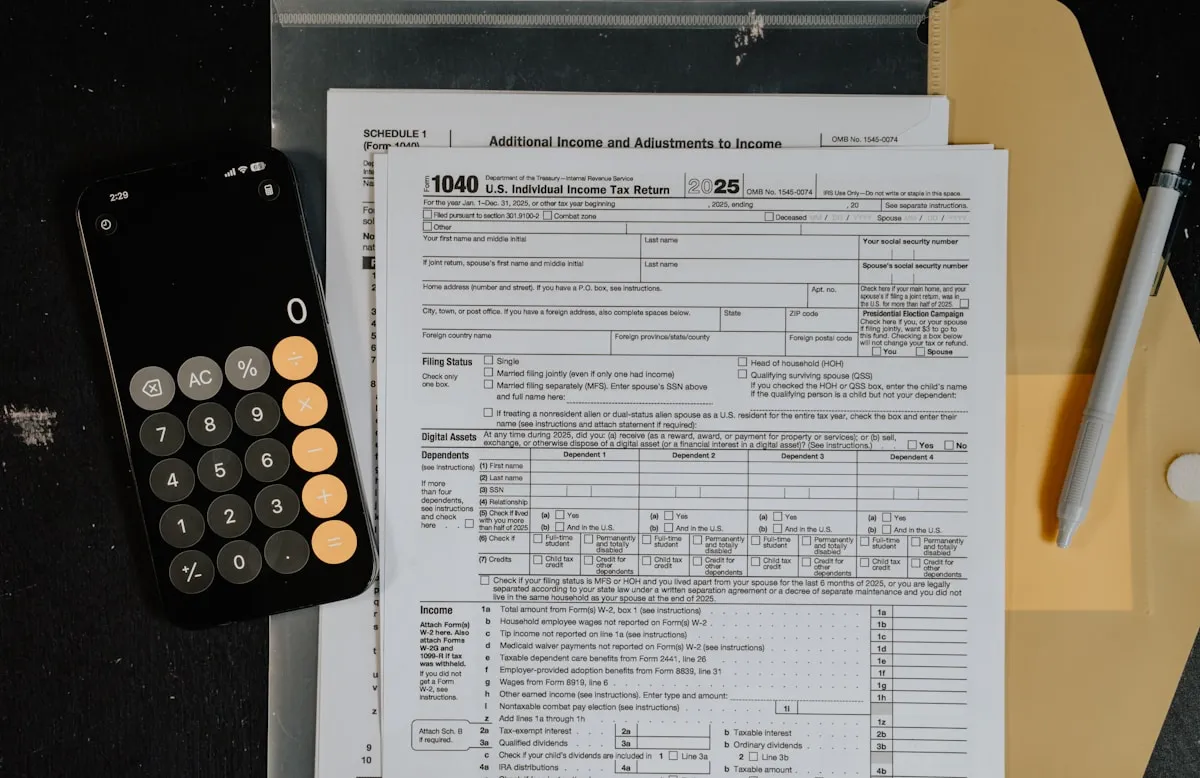
Federal taxation treats gold differently than stocks
Gold receives unfavorable treatment under IRC Section 1(h)(5)(A), which classifies precious metals as “collectibles” alongside art, rugs, antiques, stamps, and alcoholic beverages. This classification carries real consequences for investors in taxable accounts.
Long-term capital gains on gold face a 28% maximum rate, compared to the 0%/15%/20% rates that apply to stocks and bonds. However, this rate functions as a ceiling, not a floor—investors in the 10%, 12%, 22%, or 24% brackets pay their marginal rate instead. The 28% cap only applies to taxpayers in the 32%, 35%, or 37% brackets.
Short-term gains (assets held one year or less) receive no special treatment—they’re taxed as ordinary income at rates up to 37%. This creates a substantial gap: selling gold after eleven months versus thirteen months can mean a 9 percentage point difference in tax rates for high earners.
The collectibles classification extends to physically-backed gold ETFs including GLD (SPDR Gold Shares) and IAU (iShares Gold Trust). These funds hold actual gold in vaults, making each share represent direct ownership of the underlying metal. The IRS views this as indirect collectibles ownership, triggering the 28% rate.
Gold mining stocks escape the collectibles trap entirely. Companies like Barrick Gold, Newmont, and streaming companies such as Franco-Nevada and Wheaton Precious Metals are regular equities taxed at the standard 20% maximum long-term rate. A $100,000 long-term gain on physical gold costs $28,000 in federal taxes, while the same gain on mining stocks costs $20,000—an automatic $8,000 savings.
The Net Investment Income Tax adds another layer
High earners face the 3.8% Net Investment Income Tax (NIIT) on top of capital gains rates. This surtax applies to investment income when modified adjusted gross income exceeds $200,000 for single filers or $250,000 for married couples filing jointly.
Gold sales are explicitly subject to NIIT. The combined maximum federal rate becomes:
- Long-term physical gold: 31.8% (28% + 3.8%)
- Short-term physical gold: 40.8% (37% + 3.8%)
- Long-term mining stocks: 23.8% (20% + 3.8%)
⚠ Warning
Selling gold after 11 months versus 13 months can mean a 9-percentage-point difference in tax rates for high earners. Always track holding periods carefully to avoid triggering short-term ordinary income rates.
Wash sale rules don’t apply to gold—a genuine tax advantage
Gold investors possess one significant advantage: wash sale rules under IRC Section 1091 apply only to securities, not commodities or collectibles. This means investors can sell gold at a loss, claim the deduction, and immediately repurchase identical gold without waiting 30 days.
This creates powerful tax-loss harvesting opportunities unavailable to stock investors. At year-end, gold investors can realize losses to offset gains elsewhere, then immediately restore their position—maintaining market exposure while capturing tax benefits. Losses can offset capital gains dollar-for-dollar, with excess losses deductible against up to $3,000 of ordinary income annually, carrying forward indefinitely.
✓ Pro Tip
Unlike stocks, gold is exempt from wash sale rules. You can sell gold at a loss, claim the tax deduction, and immediately repurchase identical gold without waiting 30 days — a genuine advantage over stock investors.
IRS reporting requirements carry serious consequences
Precious metals dealers must file Form 1099-B for specific transactions meeting CFTC-approved regulated futures contract criteria. Understanding these thresholds matters both for compliance and privacy.
Reportable gold transactions (dealer files 1099-B):
- Gold bars/rounds: 1 kilogram (32.15 oz) or more at .995+ fineness
- Gold Maple Leaf coins: 25 or more 1-oz coins
- Gold Krugerrands: 25 or more 1-oz coins
- Gold Mexican Onzas: 25 or more 1-oz coins
American Gold Eagles are exempt from 1099-B reporting at any quantity—one of the few coins with this treatment. However, exemption from dealer reporting doesn’t mean tax exemption; all gains must be reported regardless of whether a 1099-B is issued.
Form 8300 applies to cash transactions over $10,000, filed by dealers within 15 days when receiving currency, traveler’s checks, cashier’s checks, or money orders. Wire transfers and personal checks don’t trigger this requirement.
Taxpayers report all gold sales on Form 8949 (listing each transaction) and Schedule D (summarizing totals). The 28% Rate Gain Worksheet in Schedule D instructions handles the collectibles calculation separately from regular capital gains.
Penalties for non-reporting are severe: 20% accuracy-related penalty on underpayments, potential 75% fraud penalty for willful evasion, and possible criminal prosecution. The IRS receives dealer 1099-Bs electronically—unreported sales are increasingly caught through automated matching.
Physical gold faces a 28% maximum federal rate as a "collectible," while gold mining stocks enjoy the standard 20% rate. On a $100,000 gain, that 8-percentage-point difference means $8,000 more in taxes for physical gold holders.
Tax-advantaged accounts transform gold’s tax treatment
The most powerful tax minimization strategy for gold investors is account placement—using the right account type to legally avoid the 28% collectibles rate entirely.
Roth IRAs offer the optimal solution
Gold held in a Roth IRA grows completely tax-free, with qualified withdrawals paying zero federal or state taxes. A $100,000 gold position that grows to $500,000 owes nothing upon withdrawal—versus $112,000 or more in a taxable account (28% on $400,000 gain plus potential state taxes).
This makes Roth IRAs the ideal home for physical gold, which would otherwise face the highest capital gains rates. Traditional IRAs also shelter gold from the collectibles rate, though distributions are taxed as ordinary income (potentially at rates up to 37%).
Gold IRA rules require careful compliance
Holding physical gold in retirement accounts requires a self-directed IRA with an IRS-approved custodian. Standard brokerage IRAs don’t permit physical precious metals.
Purity requirements under IRC Section 408(m)(3):
- Gold: 99.5% minimum (.995+ fineness)
- Exception: American Gold Eagles (22 karat/.9167) are specifically permitted
Approved coins include American Gold Eagles and Buffalos, Canadian Maple Leafs, Australian Kangaroos, and Austrian Philharmonics. Gold bars must meet the purity threshold.
Physical possession triggers immediate taxation. Taking personal possession of Gold IRA metals—including storing at home or in a personal safe deposit box—creates a taxable distribution equal to the full value, plus a 10% early withdrawal penalty if under age 59½. The Tax Court confirmed this in McNulty v. Commissioner (2021), rejecting “home storage IRA” schemes.
★ Important
“Home storage IRA” schemes are illegal. Taking personal possession of Gold IRA metals triggers immediate taxation on the full value, plus a 10% early withdrawal penalty if you are under 59 and a half. The Tax Court has explicitly rejected these arrangements.
Typical Gold IRA costs include $50-$150 setup fees, $75-$300 annual administration, and $100-$500 storage (segregated storage costs more than commingled). Total annual costs typically run $200-$600.
Roth conversions can lock in favorable rates
Converting Traditional IRA gold to Roth triggers ordinary income tax on the converted amount but eliminates all future taxation—including the 28% collectibles rate. This strategy works best during low-income years.
A $100,000 conversion during a 22% bracket year costs $22,000 in immediate taxes, but subsequent growth to $300,000 remains entirely tax-free. The same $200,000 gain in a taxable account would cost $56,000 in collectibles tax.
The five-year rule applies: each conversion has its own five-year waiting period for penalty-free access if under age 59½. After 59½, no waiting period applies regardless of conversion timing.
Required Minimum Distributions require liquidity planning
RMDs begin at age 73 (age 75 starting in 2033 for those born in 1960 or later). Gold IRA holders face a practical challenge: meeting RMDs from illiquid physical assets.
The RMD calculation divides the prior year-end account balance by the IRS life expectancy factor. At age 73, a $200,000 Gold IRA requires approximately $7,547 in distributions (dividing by the 26.5 factor).
Distribution options include selling gold and distributing cash, or taking in-kind distributions of physical metal. In-kind distributions transfer actual coins or bars to the owner (now held personally), valued at fair market value on the distribution date and taxed as ordinary income.
The penalty for missed RMDs dropped to 25% of the required amount (from 50% previously), and further reduces to 10% if corrected within two years. Still, planning ahead matters—maintaining some liquid assets in a Gold IRA or using the aggregation rule (taking RMDs from any IRA, not specifically the Gold IRA) provides flexibility.
Roth IRAs have no RMDs during the owner’s lifetime, making Roth conversions before age 73 a powerful strategy for those with substantial Gold IRA holdings.
Mining stocks offer an 8-percentage-point tax advantage
For taxable accounts, gold mining stocks and streaming companies provide meaningful exposure to gold prices while avoiding the collectibles rate. Companies like Barrick Gold, Newmont, Franco-Nevada, and Wheaton Precious Metals face the standard 20% maximum long-term rate versus 28% for physical gold.
On a $50,000 long-term gain, the difference is substantial:
| Investment | Tax Rate | Federal Tax | Savings |
|---|---|---|---|
| Physical gold | 28% | $14,000 | — |
| Mining stock | 20% | $10,000 | $4,000 |
Including NIIT for high earners: physical gold at 31.8% versus mining stocks at 23.8%—an 8-percentage-point spread that compounds over time.
The trade-off involves accepting equity risk, company-specific factors, and typically higher volatility than physical gold. Mining stocks often exhibit leveraged exposure to gold prices (rising and falling more than the underlying metal), while streaming/royalty companies provide more stable cash flows with lower correlation to production costs.
Optimal strategy: Hold physical gold in Roth IRAs for pure metal exposure; use mining stocks in taxable accounts for tax efficiency.
Section 1031 exchanges no longer work for gold
Prior to the Tax Cuts and Jobs Act of 2017, investors could use like-kind exchanges under Section 1031 to swap gold for other gold while deferring capital gains indefinitely. This strategy allowed rolling gains forward through successive exchanges.
Effective January 1, 2018, Section 1031 applies only to real property. All personal property exchanges—including gold, art, and collectibles—are now fully taxable events. There is no remaining mechanism to defer taxes on gold-to-gold exchanges.
Promoters occasionally claim 1031 exchanges still work for precious metals—this is incorrect. The only tax-deferred method of exchanging gold holdings is within retirement accounts, where transactions inside the account don’t trigger taxation.
ℹ Note
Since January 1, 2018, Section 1031 like-kind exchanges apply only to real property. Any promoter claiming you can do a tax-deferred gold-to-gold exchange is providing incorrect information.

The step-up in basis makes estate planning extraordinarily powerful
One of the most valuable provisions in the tax code for gold investors is the step-up in basis at death. When a beneficiary inherits gold, the cost basis resets to fair market value on the date of death, completely eliminating accumulated capital gains.
Example: Gold purchased for $100,000 in 2000, worth $500,000 at death, passes to heirs with a $500,000 stepped-up basis. If sold immediately, zero capital gains tax is owed—the $400,000 appreciation is never taxed. Had the original owner sold before death, $112,000 in federal taxes would have been due (28% of $400,000).
This creates a compelling “hold until death” strategy for highly appreciated gold positions. The tax savings from step-up can exceed estate taxes for many families, particularly those below the federal exemption threshold.
Critical documentation: Executors must obtain professional appraisals at death to establish the stepped-up basis. Without documentation, IRS may challenge reported values. Under basis-consistency rules (Section 1014(f)), beneficiaries’ basis must match the value reported on Form 706 if an estate tax return was required.
Estate tax exemptions have been significantly increased and made permanent
The federal estate tax landscape changed dramatically with the One Big Beautiful Bill Act (OBBBA) signed in July 2025. The previously scheduled sunset of higher exemptions has been eliminated.
Current exemptions (2025):
- Individual: $13.99 million
- Married couple (with portability): $27.98 million
2026 and beyond:
- Individual: $15 million (permanent, indexed for inflation)
- Married couple: $30 million
- No sunset provision—the exemption won’t revert to lower levels
Amounts exceeding the exemption are taxed at 40% federal estate tax. For most families, the increased exemption eliminates federal estate tax entirely, making the step-up in basis the primary tax benefit of holding gold until death.
Portability allows surviving spouses to use a deceased spouse’s unused exemption, but requires filing Form 706 within five years of death to elect this benefit. The Generation-Skipping Transfer (GST) exemption is not portable.
Trust structures serve multiple purposes for gold holdings
Different trust structures accomplish different objectives for gold investors—probate avoidance, estate tax reduction, asset protection, and multi-generational wealth transfer each require specific approaches.
Revocable living trusts avoid probate while maintaining control
Revocable trusts allow gold to pass directly to beneficiaries without court involvement, maintaining privacy (avoiding public probate records) and enabling faster distribution. The grantor retains full control during life, can amend or revoke the trust at any time, and a successor trustee manages assets if the grantor becomes incapacitated.
For estate tax purposes, revocable trust assets remain in the grantor’s taxable estate—they receive the step-up in basis at death but don’t reduce estate taxes.
Irrevocable trusts remove assets from the taxable estate
Transferring gold to an irrevocable trust removes it from the grantor’s estate immediately (using gift tax exemption), eliminates estate taxes on future appreciation, and can provide creditor protection for beneficiaries. The trade-off is loss of control—the transfer is permanent and the grantor cannot reclaim the assets.
Grantor trusts (where the grantor pays income taxes on trust income) allow assets to grow without tax erosion for beneficiaries. Non-grantor trusts file separate returns and face highly compressed brackets—reaching the 37% rate at approximately $14,450 of income in 2025.
Dynasty trusts enable multi-generational wealth transfer
For families with substantial gold holdings, dynasty trusts can remove assets from transfer taxation permanently. Available in states like South Dakota, Alaska, and Nevada (where trusts can last indefinitely or centuries), dynasty trusts shelter both the original gift and all subsequent appreciation from estate and GST taxes at each generation.
Important limitation: Dynasty trust assets do not receive step-up in basis at each beneficiary’s death—they retain the original cost basis, potentially creating significant capital gains when eventually sold. This makes dynasty trusts less advantageous for highly appreciated gold than holding until the first generation’s death.
Lifetime gifts carry carryover basis—usually a disadvantage
Unlike inherited assets, lifetime gifts of gold pass with carryover basis—the recipient inherits the donor’s original cost, not current fair market value. This distinction creates significant tax consequences.
Gift scenario: Gold with $25,000 cost basis, $250,000 current value
- Recipient’s basis: $25,000
- If sold at $250,000: $225,000 taxable gain
- Tax at 28%: $63,000
Inheritance scenario: Same gold, same values
- Recipient’s stepped-up basis: $250,000
- If sold at $250,000: $0 taxable gain
- Tax: $0
The $63,000 difference often exceeds any estate tax savings from removing appreciation from the estate. Lifetime gifting of appreciated gold makes sense primarily when:
- The estate will exceed exemptions, making 40% estate tax savings greater than 28% capital gains cost
- The recipient plans to hold indefinitely, removing future appreciation from the donor’s estate
- State estate taxes apply at lower thresholds than federal
Annual gift exclusion allows systematic wealth transfer
The 2025 annual gift tax exclusion is $19,000 per recipient ($38,000 for married couples electing gift-splitting). Gifts within this amount require no Form 709 filing and don’t reduce lifetime exemptions.
Strategic application: A couple with four adult children and their spouses (8 recipients) can transfer $304,000 annually ($38,000 × 8) with no gift tax consequences. Over 10 years, this removes $3.04 million from their estate without using any lifetime exemption.
Educational and medical exclusions provide unlimited additional transfers
Amounts paid directly to educational institutions for tuition or to healthcare providers for medical expenses are fully exempt from gift tax with no dollar limit—separate from the annual exclusion. These payments don’t require Form 709 filing and don’t reduce lifetime exemptions.
A grandparent can pay $50,000 tuition directly to a university, $25,000 medical bills directly to a hospital, and still gift $19,000 in gold to the same grandchild—$94,000 total with no gift tax implications.
"The step-up in basis at death can eliminate hundreds of thousands in deferred capital gains, making 'hold until death' one of the most effective wealth transfer strategies available."-- Estate Planning Principle
Charitable giving of gold avoids capital gains entirely
Donating appreciated gold to qualified charities eliminates capital gains tax while generating a charitable deduction. For gold with substantial appreciation, this can be more valuable than selling and donating cash.
Example: Gold purchased for $20,000, now worth $100,000
- If sold and donated: $80,000 gain × 28% = $22,400 tax; $77,600 donated
- If donated directly: No capital gains tax; $100,000 charitable deduction (subject to AGI limits)
Deduction rules for gold differ from securities. For donations to charities without a “related use” for the gold (most charities), the deduction may be limited to cost basis rather than fair market value. However, IRS guidance suggests non-numismatic bullion coins (American Eagles, Krugerrands, Maple Leafs) may be treated like currency, potentially allowing full fair market value deductions. Donations exceeding $5,000 require qualified appraisals and Form 8283.
Qualified Charitable Distributions from IRAs allow those aged 70½ or older to direct up to $108,000 annually ($216,000 for married couples) from Traditional IRAs to charity, counting toward RMDs while being excluded from taxable income. For non-itemizers, this provides better tax treatment than taking distributions and donating separately. Gold IRA holders would need to sell metal and distribute cash to charity.
State taxes can nearly double the effective rate
State income taxes on gold sales range from zero to 13.3%, creating dramatic differences in after-tax proceeds depending on where investors live.
No-income-tax states for gold sales
Nine states impose no income tax on capital gains: Alaska, Florida, Nevada, South Dakota, Tennessee, Texas, Wyoming, and—as of January 1, 2025—New Hampshire (which fully repealed its interest and dividends tax). Missouri became the first state with income tax to eliminate capital gains taxation entirely, effective retroactively to January 1, 2025.
Washington state is no longer tax-free for large gains. A 7% capital gains excise tax applies to gains exceeding $270,000, increasing to 9.9% for gains exceeding $1 million above the exemption.
High-tax state rates compound federal burden
California’s 13.3% top rate (including the 1% Mental Health Services Tax on income over $1 million) creates the highest combined burden for gold investors. New York City residents face 14.776% combined state and local rates. New Jersey reaches 10.75%, Minnesota 10.85% (including a 1% surtax on net investment income over $1 million).
Total effective rate for California high earner selling gold:
- Federal collectibles rate: 28.0%
- NIIT: 3.8%
- California state: 13.3%
- Combined: 45.1%
A $500,000 gold gain faces $225,500 in total taxes in California versus $159,000 in a no-income-tax state—a $66,500 difference.
⚠ Warning
California’s combined rate on gold sales can reach 45.1% for high earners. If you live in a high-tax state and plan to sell a significant gold position, consult a tax professional about residency planning well in advance.
Residency change before major sales requires careful planning
Establishing domicile in a no-tax state before selling significant gold positions can save substantial amounts. However, “sticky states” like California and New York aggressively audit suspected taxpayers who move before large sales.
Domicile change requirements include physical presence (spending more time in the new state than any other), driver’s license, voter registration, vehicle registration, professional services, club memberships, and transferring “near and dear” personal possessions. The 183-day rule makes those present in a state for 183+ days while maintaining a permanent place of abode statutory residents subject to taxation.
Recommended timeline: Complete residency change 12-24 months before planned sales, with extensive documentation from day one. Six months is minimum; anything shorter invites audit scrutiny.
State estate taxes apply at far lower thresholds
While the federal exemption exceeds $13.99 million, 12 states plus D.C. impose estate taxes with exemptions as low as $1 million.
Lowest threshold states:
- Oregon: $1,000,000 (10-16% rates)
- Massachusetts: $2,000,000 (0.8-16%)
- Minnesota: $3,000,000 (13-16%)
- Washington: $3,000,000 (10-35%—highest top rate as of July 2025)
New York’s “cliff” provision deserves special attention: if an estate exceeds 105% of the $7.16 million exemption ($7,518,000), the entire exemption disappears and the full estate is taxed. This can create effective marginal rates exceeding 100% on dollars near the threshold.
Five states impose inheritance taxes (paid by heirs rather than estates): Kentucky, Nebraska, New Jersey, Pennsylvania, and Maryland. Maryland uniquely imposes both estate and inheritance taxes.
Most state exemptions are not portable between spouses, unlike the federal exemption. Couples in states with estate taxes may need credit shelter trusts or other strategies even if well below federal thresholds.
Sales tax on gold purchases varies significantly
Most states exempt investment-grade bullion from sales tax, but exceptions and thresholds apply. California requires purchases of $2,000 or more for exemption; below that threshold, 7.25%+ sales tax applies. Hawaii imposes a 4% general excise tax on all gold purchases. Maryland newly imposed sales tax on bullion effective 2025. Washington state’s exemption expired October 1, 2025.
Practical scenarios demonstrate integrated planning
Scenario: Retiree with $200,000 gold position
A retiree purchased gold for $100,000 in 2015, now worth $200,000, creating a $100,000 gain. Selling all at once triggers $28,000 federal tax (28% rate) plus $3,800 NIIT if income exceeds $200,000—total $31,800.
Strategy: Sell over two years ($50,000 gain each) to stay below NIIT thresholds. Result: $14,000 tax annually, $28,000 total—saving $3,800 by avoiding NIIT.
Scenario: High earner in California
A California resident with $150,000 gold gain faces combined 45.1% effective rate: $42,000 federal (28%), $5,700 NIIT (3.8%), $19,950 California (13.3%)—total $67,650.
Strategy: Relocate to Nevada or other no-tax state 12-24 months before sale. Eliminates $19,950 state tax, reducing total to $47,700—immediate $19,950 savings.
Scenario: Estate with $5M gold holdings
Decedent’s cost basis $1M, fair market value at death $5M. Step-up in basis gives heirs $5M basis. If sold immediately: $0 capital gains tax.
Had decedent sold before death: ($5M - $1M) × 28% = $1,120,000 tax. The step-up in basis provides $1,120,000 in tax savings—far exceeding most estate planning costs.
Scenario: Annual gifting to reduce estate
A couple with $35M estate (above $27.98M exemption) faces 40% estate tax on $7.02M excess—approximately $2.8M in taxes.
Strategy: Gift $38,000 annually to each of 6 family members = $228,000/year removed from estate. Add $100,000 tuition payments and $24,000 medical expenses paid directly = $352,000/year. Over 10 years: $3.52M transferred, reducing estate tax by approximately $1.4M.
Documentation protects investors and heirs
Maintaining comprehensive records is essential for defending cost basis, proving ownership, and enabling efficient estate administration.
Essential records:
- Purchase invoices with dates, prices, quantities, and dealer information
- Wire transfer and payment confirmations
- Certificates of authenticity and assay certificates
- Serial numbers for numbered bars
- Storage agreements and insurance policies
- Photographs documenting condition and holdings
- Prior year tax returns showing gold transactions
Retention period: Keep records for the life of the asset plus seven years after the tax return reporting sale (three years for audit plus additional margin). Estate-related records should be retained indefinitely until estate administration completes.
For estate planning, location disclosure is critical. Executors cannot distribute assets they cannot find. Wills and trust documents should specify where gold is stored—home safe combinations, safe deposit box locations and key whereabouts, vault company contact information—and who has access authorization.
Professional advisors become essential at higher values
Gold investors with holdings exceeding $100,000, estate planning needs involving gold as a significant asset, multi-state taxation issues, or international storage should engage qualified professionals.
Relevant advisors:
- CPA or Enrolled Agent: Tax preparation, Schedule D compliance, collectibles rate calculations ($200-500/hour; $500-2,000+ for returns with gold sales)
- Estate Planning Attorney: Wills, trusts, beneficiary designations, probate avoidance ($2,000-5,000+ for trust documents)
- Gold IRA Custodian: IRS-compliant storage and administration ($175-600 annually)
- Qualified Appraiser: Estate valuations, charitable donation documentation (fees vary by complexity)
International gold storage adds complexity through FBAR reporting (FinCEN Form 114) for foreign accounts exceeding $10,000 aggregate value, and potential Form 8938 (FATCA) requirements for specified foreign financial assets. Foreign storage accounts at facilities like BullionVault, GoldMoney, or Perth Mint Certificate Program likely trigger FBAR requirements. Penalties for willful violations reach 50% of account value.
Conclusion: Optimal strategies for gold tax efficiency
The most impactful strategies for gold investors prioritize account placement and estate planning over trading tactics. Holding physical gold in Roth IRAs eliminates the 28% collectibles rate entirely, transforming gold’s tax disadvantage into tax-free growth. For taxable accounts, gold mining stocks provide 8 percentage points better treatment than physical gold while offering meaningful exposure to gold prices.
Estate planning creates the largest single tax benefits through step-up in basis, which can eliminate hundreds of thousands in deferred capital gains. Combined with generous federal exemptions now permanently set at $15 million (starting 2026), most gold investors face no federal estate tax while heirs receive a fresh cost basis.
State tax planning matters for significant positions—the difference between California’s 45.1% combined rate and zero-tax states represents real wealth. Establishing residency in favorable jurisdictions before major sales requires 12-24 months of planning but can save five or six figures on large positions.
Above all, documentation discipline protects investors: purchase records establish cost basis, appraisals at death preserve step-up benefits, and location disclosure ensures heirs receive their inheritance. The complexity of gold taxation rewards those who plan ahead—and penalizes those who don’t.